For parents · Toronto, Ontario
Toronto infant daycare: where the 4,412 infant spaces are, by ward
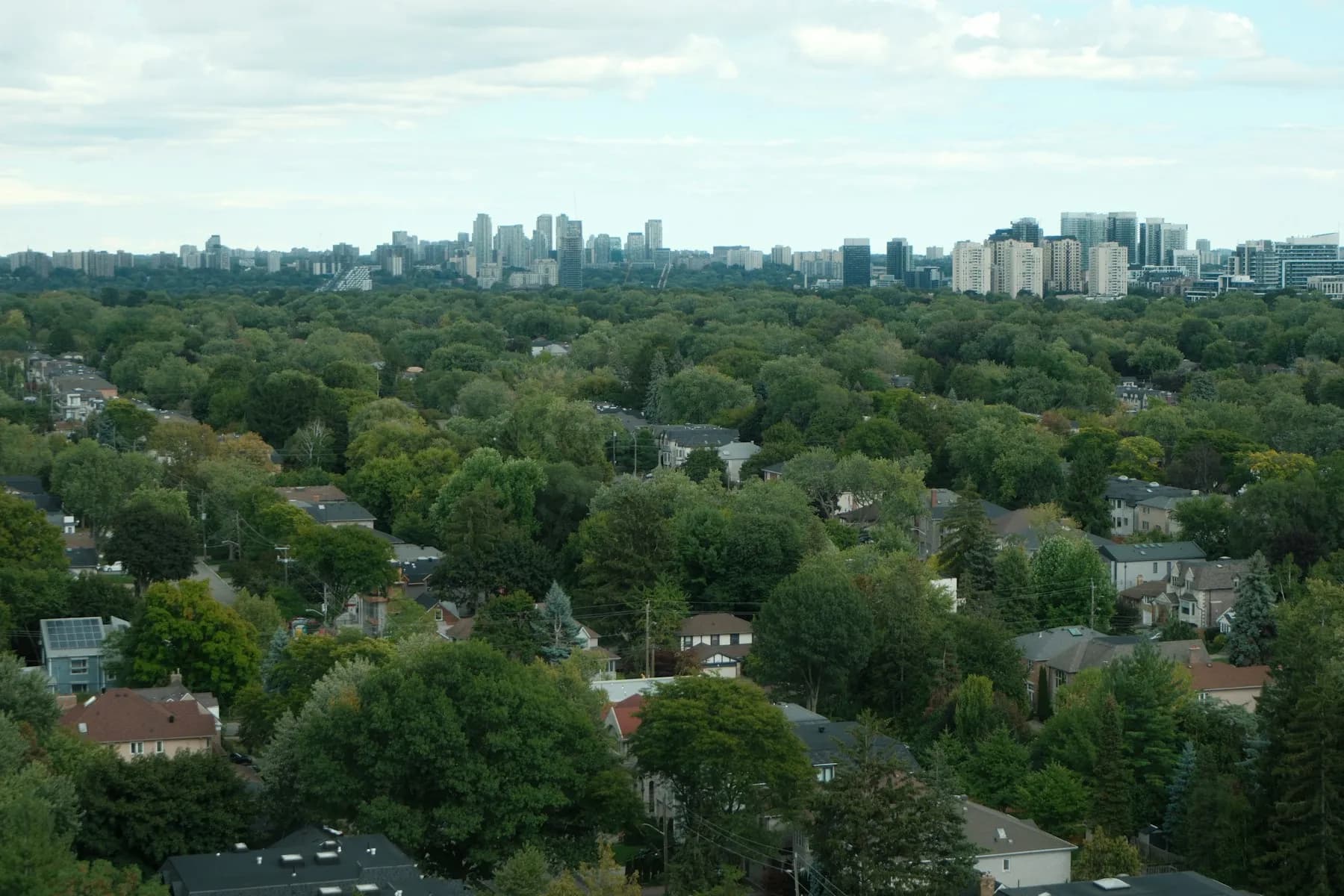
North York photograph by Harman Tatla / Unsplash
Only 384 of Toronto’s 1,100 licensed centres take babies under 18 months. Here is where those rooms are, and how to get on the right lists.
By DaycareOnUpdated 6 min read
In Toronto the hard part is the infant room, not the fee. City data from September 28, 2026 lists 1,100 licensed centres, but only 384 have infant spaces, and 4,412 infant spaces make up about 5% of all licensed spaces. If your baby will start before 18 months, build your list around infant rooms across two or three wards, not one neighbourhood.
384 of Toronto’s 1,100 licensed centres have an infant room. 290 of those rooms hold exactly ten babies.
| Ward | Centres with an infant room | Infant spaces |
|---|---|---|
| Ward 10, Spadina-Fort York | 28 of 46 | 337 |
| Ward 14, Toronto-Danforth | 24 of 59 | 269 |
| Ward 24, Scarborough-Guildwood | 17 of 40 | 222 |
| Ward 8, Eglinton-Lawrence | 18 of 55 | 216 |
| Ward 19, Beaches-East York | 19 of 61 | 212 |
| Ward 12, Toronto-St. Paul’s | 17 of 50 | 200 |
| Ward 15, Don Valley West | 14 of 48 | 196 |
| Ward 21, Scarborough Centre | 16 of 39 | 192 |
| Ward 7, Humber River-Black Creek | 16 of 35 | 190 |
| Ward 6, York Centre | 17 of 44 | 186 |
| Ward 4, Parkdale-High Park | 15 of 59 | 186 |
| Ward 5, York South-Weston | 17 of 35 | 186 |
| Ward 16, Don Valley East | 16 of 46 | 182 |
| Ward 3, Etobicoke-Lakeshore | 15 of 64 | 170 |
| Ward 1, Etobicoke North | 13 of 31 | 170 |
| Ward 17, Don Valley North | 14 of 48 | 166 |
| Ward 13, Toronto Centre | 15 of 30 | 157 |
| Ward 9, Davenport | 14 of 38 | 149 |
| Ward 11, University-Rosedale | 14 of 42 | 145 |
| Ward 18, Willowdale | 12 of 37 | 139 |
| Ward 22, Scarborough-Agincourt | 13 of 39 | 136 |
| Ward 25, Scarborough-Rouge Park | 12 of 34 | 122 |
| Ward 2, Etobicoke Centre | 12 of 49 | 122 |
| Ward 20, Scarborough Southwest | 10 of 40 | 106 |
| Ward 23, Scarborough North | 6 of 31 | 56 |
Start with the infant room, not the neighbourhood
Two of every three Toronto centres cannot take a baby under 18 months. The City lists 1,100 licensed centres with 87,121 spaces; 384 of them have infant spaces, and those add up to 4,412. Toddler rooms hold 13,325 spaces and preschool rooms 27,253, so the list gets much wider once your child is older.
So what: a list of the five centres nearest your home can easily contain one or two infant rooms. Filter for infant care first, then look at location. If your start date is after 18 months, check the toddler room instead, because many more centres have one.
Source: City of Toronto Open Data: Licensed Child Care Centres
Most Toronto infant rooms hold ten babies
290 of the 384 infant rooms are licensed for exactly ten infants. Ontario’s regulation sets a maximum infant group of ten with three staff, so a typical room is one group. A few centres run two or three groups, up to 30 spaces.
So what: a room of ten does not open many places a year. Spaces free up mainly when babies move up to the toddler room. On a tour, ask how many children are due to move up in the months around your start date. That answer tells you more than a place on a list.
Source: City of Toronto Open Data: Licensed Child Care Centres
Source: Ontario child care centre licensing manual: ratios and group size
City-run centres are the most infant-heavy group
33 of the 39 centres the City of Toronto operates have infant rooms, a far higher share than the rest of the city. These are Toronto Early Learning & Child Care Services (TELCCS) programs, and they keep their own lists.
The City describes two routes. Families who need help with cost apply through the Child Care Fee Subsidy application or 311; that one application puts them on the subsidy waitlist and on the waitlists of the TELCCS programs they choose. Families paying full fee use the TELCCS waitlist registration. The City says there is a subsidy waitlist and you can apply as soon as you are expecting.
Other centres, about 1,060 of them, keep separate lists. Contact each one you want, and record what they told you.
Source: City of Toronto Open Data: Licensed Child Care Centres
Where infant spaces sit by ward
Infant spaces are spread unevenly. Spadina-Fort York has 337 across 28 centres; Scarborough North has 56 across 6. Most wards fall between 120 and 220.
Use the table at the top as a search map, not a ranking. More spaces do not mean shorter waits, because downtown wards also have more families competing for them, and the City data does not count babies per ward. Pick your home ward, your work ward, and one ward on the commute between them. That usually triples the number of infant rooms you can realistically use.
Source: City of Toronto Open Data: Licensed Child Care Centres
The CWELCC fee cap applies at almost every infant room
961 of Toronto’s 1,100 centres are enrolled in CWELCC, including 365 of the 384 with infant rooms. In Ontario, CWELCC fees for children under six are capped at $22 a day, and the province reports an average of $19 a day.
The 139 centres outside CWELCC are mostly commercial operators. Their fees are set by the centre, so ask for the daily or monthly infant fee in writing before you tour. Fee subsidy is separate from CWELCC: 733 centres have a subsidy agreement with the City.
Source: City of Toronto Open Data: Licensed Child Care Centres
Source: Ontario: Canada-Ontario Early Years and Child Care Agreement
What to do this week
An hour of setup now saves months of guessing later.
- Pick three wards: home, work, and one on the commute. Open each from the table above to see its infant rooms.
- If cost is a concern, apply for fee subsidy now, even before birth, and choose the TELCCS programs you want on that application. If you will pay full fee, use the TELCCS waitlist registration.
- Contact every other infant room on your list. Give your child’s birth date, desired start date, and days needed.
- Ask each centre: how many infants are expected to move up to the toddler room near our start date, and how do you want us to confirm we are still interested?
- Record each list, date, and reply in one tracker so you can follow up on the schedule each centre sets.
FAQ
- How many Toronto daycares take infants?
- 384 of the 1,100 licensed centres in the City of Toronto’s September 28, 2026 data have infant spaces, for 4,412 infant spaces in total. Licensed home child care is not included in that count, so some home providers also accept babies.
- Does one application cover every city-run daycare?
- It covers the TELCCS programs you choose. The City says its fee subsidy application places you on the subsidy waitlist and on the waitlists of the TELCCS programs you select. Families paying full fee register through the TELCCS waitlist registration instead. Non-City centres keep their own lists.
Sources
- City of Toronto Open Data: Licensed Child Care Centres · Checked
- City of Toronto: TELCCS waitlist registration · Checked
- City of Toronto: Child Care Fee Subsidy · Checked
- Ontario: Canada-Ontario Early Years and Child Care Agreement · Checked
- Ontario child care centre licensing manual: ratios and group size · Checked
Related guides
Seattle, Washington
10 Seattle daycares and preschools to compare in 2026
Vancouver area, British Columbia
Vancouver childcare guide: six options to compare in 2026
Toronto, Ontario
12 Toronto daycares to know in 2026, and what each is best for

